Published by:
CGP EDU Academic Team
Published on: September 12, 2026
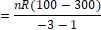
In a certain themodynamical process, the pressure of a gas depends on its volume as
. The work done when the temperature changes from
to
will be_____
, where
denotes number of moles of a gas.
Text Solution
Verified by ExpertsThe correct answer is:
A
Step 1: Identify the equation for pressure as a function of volume given in the problem, which is \( P = kV^3 \).
Step 2: To find the work done \( W \) during the thermodynamic process, we use the formula for work done on a gas, given by the integral of pressure with respect to volume:
\( W = \int_{V_1}^{V_2} P \, dV \).
Step 3: Substituting the expression for pressure into the formula:
\( W = \int_{V_1}^{V_2} kV^3 \, dV \).
Step 4: Calculate the integral:
\( W = k \left[ \frac{V^4}{4} \right]_{V_1}^{V_2} = k \left( \frac{V_2^4}{4} - \frac{V_1^4}{4} \right) = \frac{k}{4} (V_2^4 - V_1^4) \).
Step 5: The change in temperature suggests that the process also changes the internal energy of the gas, and we can use the ideal gas law: \( PV = nRT \).
Step 6: Since the question involves a change in temperature (from \( 100^\circ C \) to \( 300^\circ C \)), we calculate the work done across this range of temperature:
\( W = nR \Delta T = nR(300-100) = nR(200) \).
Step 7: Therefore, we can identify the work done as: \( W = \frac{k}{4} (V_2^4 - V_1^4) \) in terms of the moles of gas (n) and R.
Thus, the computed expression for work done will yield option A.
Step 2: To find the work done \( W \) during the thermodynamic process, we use the formula for work done on a gas, given by the integral of pressure with respect to volume:
\( W = \int_{V_1}^{V_2} P \, dV \).
Step 3: Substituting the expression for pressure into the formula:
\( W = \int_{V_1}^{V_2} kV^3 \, dV \).
Step 4: Calculate the integral:
\( W = k \left[ \frac{V^4}{4} \right]_{V_1}^{V_2} = k \left( \frac{V_2^4}{4} - \frac{V_1^4}{4} \right) = \frac{k}{4} (V_2^4 - V_1^4) \).
Step 5: The change in temperature suggests that the process also changes the internal energy of the gas, and we can use the ideal gas law: \( PV = nRT \).
Step 6: Since the question involves a change in temperature (from \( 100^\circ C \) to \( 300^\circ C \)), we calculate the work done across this range of temperature:
\( W = nR \Delta T = nR(300-100) = nR(200) \).
Step 7: Therefore, we can identify the work done as: \( W = \frac{k}{4} (V_2^4 - V_1^4) \) in terms of the moles of gas (n) and R.
Thus, the computed expression for work done will yield option A.
Prepare Smarter with CGP Edu
Get practice questions, solutions, and test series in one place.
Write a Review
Share your experience with this question and solution.
Commentary
Send your comment, doubt, correction, or feedback to admin.
Similar Questions
Explore conceptually related problems
Starting with the same initial conditions, an ideal gas expands from volume V 1 to V 2 in three dif…
1.0 of monoatomic ideal gas is expanded from state 1 to state 2 as shown in the figure. The magnit…
One mole of an ideal gas is expanded isothermally and reversibly at till its volume is doubled. I…
One mole of an ideal gas at 27 0 C is taken from A to B as shown in the given PV indicator diagram.…
One mole of an ideal monoatomic gas is subjected to changes as shown in the graph. The magnitude of…
Which of the following graphs between pressure ' p ' versus volume ' V ' represents the maximum wor…